
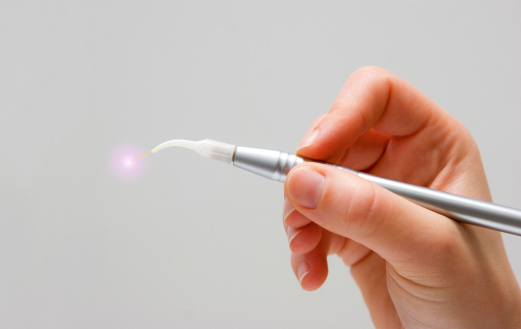
 Let’s explore how technology helps us take better care of your teeth. You probably know lasers from science fiction movies, but they’re also becoming a helpful tool in modern dentistry. A laser is a very focused beam of light that can do some amazing things in your mouth.
What is a Dental Laser?
Dental lasers use concentrated light energy to perform a variety of procedures. Different types of lasers are used for different tasks, kind of like how a dentist has different tools for cleaning, filling, and extracting teeth. Some lasers work on hard tissues like enamel (the outer layer of your teeth), while others are better suited for soft tissues like your gums.
When Might a Laser Be Used?
Lasers have several applications in oral care. For example, they can be used to:
- Treat Gum Disease: Lasers can target and remove diseased tissue in the gums with precision. This can help reduce inflammation and promote healing.
- Perform Biopsies: If your dentist needs to take a small sample of tissue for testing, a laser can be used to make a clean and comfortable incision.
- Expose Partially Erupted Teeth: Sometimes, a tooth doesn’t fully emerge from the gums. A laser can help remove the excess tissue covering the tooth, allowing it to erupt properly.
- Treat Canker Sores and Cold Sores: Lasers can reduce the pain and speed up the healing of these bothersome sores.
- Assist in Restoration Dentistry: Lasers can prepare a tooth for a filling.
What are the Benefits of Using a Laser?
Using a laser can offer some advantages over traditional methods. These may include:
- Reduced Bleeding: Lasers can cauterize (seal) blood vessels as they cut, which means less bleeding during and after the procedure.
- Less Swelling and Discomfort: Laser procedures are often less invasive, leading to reduced swelling and discomfort.
- Faster Healing: Because lasers promote tissue regeneration, healing times may be shorter.
- Increased Precision: Lasers allow dentists to target specific areas with great accuracy, minimizing damage to surrounding tissues.
- Reduced Need for Anesthesia: In some cases, laser procedures may require less or even no anesthesia.
- Decreased Risk of Infection: The heat from the laser can sterilize the area, reducing the risk of infection.
Are Lasers Right for Everyone?
While lasers offer many benefits, they are not always the best option for every situation. Your dentist will carefully evaluate your individual needs and circumstances to determine if a laser is appropriate for your treatment. Some procedures may still be better suited to traditional methods. It’s important to have an open discussion with your dentist about all your options.
The Future of Dental Lasers
The use of lasers in dentistry is constantly evolving. As technology advances, we can expect to see even more innovative applications for lasers in the years to come. This means even better, more comfortable, and more effective oral care for you.


